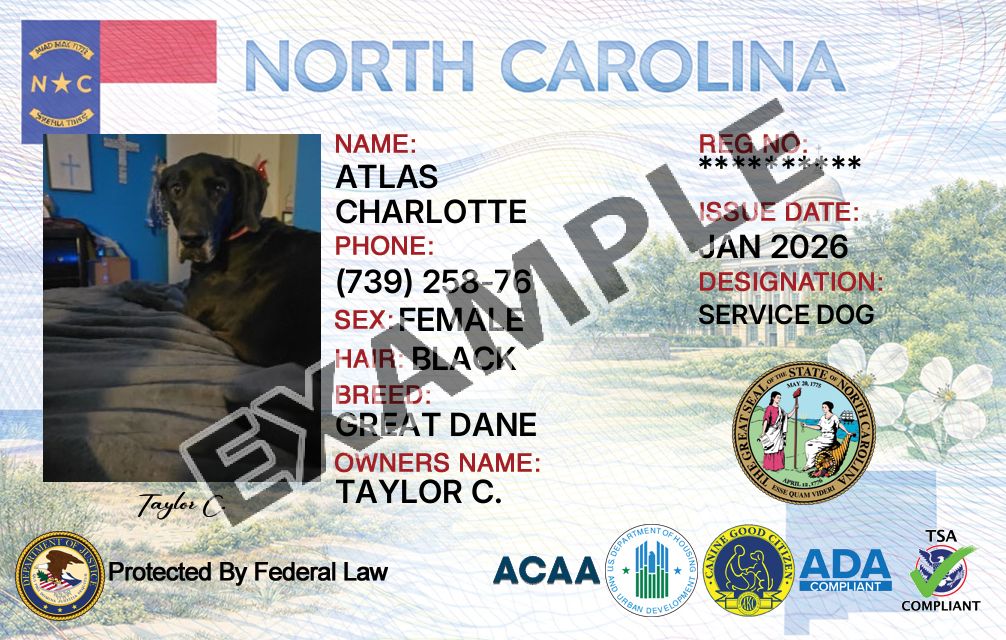
Overview of Dog Licensing in Clay County, North Carolina
If you’re searching where do I register my dog in Clay County, North Carolina for my service dog or emotional support dog, the most important thing to know is that there usually isn’t a single statewide “service dog registration” or “emotional support animal registry.” Instead, what most people mean by “registering” is (1) complying with rabies vaccination rules and (2) following any local dog license, tag, or animal control requirements where you live.
In Clay County, rabies control and many animal-related public health processes are handled locally through county offices. If you need an animal control dog license Clay County, North Carolina answer, start with the official county health and animal services contacts below, then confirm what your specific address (inside or outside town limits) requires.
Important clarification before you “register” a service dog or ESA
- Dog licensing is a local requirement (often tied to rabies vaccination or identification tags).
- Service dog legal status comes from disability and public-access laws (not from buying a vest, ID card, or online registration).
- Emotional support animals (ESAs) are not service dogs and generally do not have public-access rights.
Where to Register or License Your Dog in Clay County, North Carolina
Because dog licensing and rabies enforcement are commonly handled at the local level, the offices below are good starting points for where to register a dog in Clay County, North Carolina. Ask which office issues any local tags (if applicable), where rabies documentation is recorded, and how to report bites, nuisance issues, or found/stray animals.
Clay County Health Department
Address
345 Courthouse Drive
Hayesville, NC 28904
Phone
(828) 389-8052
Fax
(828) 389-8533
Office Hours
Monday–Friday: 8:00 am–12:00 pm; 1:00 pm–5:00 pm
envhealth@clayhdnc.us
After-Hours Reporting (dispatch)
(828) 389-2256
Clay County Health Department — Environmental Health
Environmental Health is often the right contact for rabies-related enforcement questions, documentation guidance, and county public health animal processes.
Address
345 Courthouse Drive
Hayesville, NC 28904
Phone
(828) 389-8326
envhealth@clayhdnc.us
Clay County Dispatch (After-hours on-call animal-related reporting)
If you have an urgent after-hours situation and are trying to reach the appropriate on-call staff, county dispatch may be the official path.
Phone
(828) 389-2256
When to use
After-hours reporting (non-911), as directed by county health/animal services information.
How Dog Licensing Works Locally in Clay County, North Carolina
1) Start with rabies compliance (it’s required statewide)
North Carolina law requires that owned dogs (as well as cats and ferrets) be vaccinated against rabies by four months of age. Your veterinarian typically provides a rabies certificate and a rabies tag as proof of vaccination. If you’re unsure what is “required” versus “recommended,” rabies is the key vaccine tied to legal compliance.
2) Understand what “dog license in Clay County, North Carolina” may mean
In many North Carolina communities, “licensing” may refer to one or more of the following local processes:
- Local dog tax or annual license (issued by a county or municipality, sometimes with a numbered tag).
- Rabies tag verification (proof that the animal is currently vaccinated, used during bites, quarantine, or enforcement actions).
- Animal control identification practices that help reunite lost pets with owners.
Because licensing is handled locally, the correct answer to where to register a dog in Clay County, North Carolina can depend on whether you live: (a) inside a town’s jurisdiction (where a town ordinance may apply), or (b) in unincorporated Clay County (where county processes apply). The offices listed above can tell you which rules apply at your address and what steps (if any) Clay County requires for local licensing.
3) What to ask when you call
- “Do you issue a county dog license tag, or is rabies vaccination proof the main requirement?”
- “If there is a license, is it annual, and what is the fee schedule?”
- “What documents do I need to bring or email (rabies certificate, ID, proof of residency)?”
- “If my dog is a service dog, is there any difference in the licensing process or fee?”
- “If my dog is an emotional support animal, does that change licensing requirements?”
4) Rabies vaccinations, bites, and quarantine
Rabies rules affect what happens if a dog bites someone or is bitten by an animal that could be rabid. If a bite occurs, local public health and animal control processes may require proof of current rabies vaccination and may impose quarantine or observation requirements. If you cannot immediately locate proof, it can complicate (and prolong) required follow-up steps.
Service Dog Laws in Clay County, North Carolina
Service dogs are defined by training and disability-related work
A service dog is not a pet with a certificate—it is a dog individually trained to do work or perform tasks for a person with a disability. The dog’s legal status is based on what the dog is trained to do and the handler’s disability-related need, not on whether the dog has a vest, badge, or online registration.
Dog licensing vs. service dog status (they are separate)
Even if your dog is a service dog, local requirements like a dog license in Clay County, North Carolina (if applicable) and rabies vaccination rules typically still apply. Think of it this way:
- Service dog status relates to access and accommodation rights.
- Licensing relates to local identification, rabies compliance, and community animal-control administration.
What businesses can ask (and what they generally can’t)
If you’re asked about your service dog in a public place, the usual standard is that staff may ask limited questions focused on whether the dog is a service animal and what tasks it is trained to perform. They generally should not require you to show “registration papers” from an online registry. However, you may still be expected to follow local animal laws and keep your dog under control and housebroken.
Does Clay County issue a special service dog license?
Some jurisdictions offer optional tags or notations, and some do not. The safest approach is to call the official offices listed above and ask whether Clay County offers any specific service-dog-related tag or fee adjustment. If an office cannot confirm it, treat any paid third-party “registration” as unnecessary.
Emotional Support Animal Rules in Clay County, North Carolina
ESAs are not the same as service dogs
An emotional support animal (ESA) may support a person’s mental health, but ESAs are not trained to perform disability-related tasks in the way service dogs are. That difference matters because ESAs generally do not have the same public-access rights as service dogs.
Licensing is still local (ESA status doesn’t replace it)
If you’re trying to figure out where do I register my dog in Clay County, North Carolina for my service dog or emotional support dog, keep in mind: an ESA letter or documentation (for housing-related purposes) does not replace local requirements such as rabies vaccination or any local licensing/tag rules. If Clay County (or a municipality within Clay County) requires a local license, that process usually applies regardless of whether the dog is an ESA.
Avoid misleading “ESA registration” offers
ESAs are frequently targeted by sites selling instant registrations, ID cards, and database listings. Those products are not the same as complying with local animal rules. For a legitimate local answer, focus on your rabies proof and any county/town dog license process confirmed by Clay County offices.
Frequently Asked Questions
Usually, yes—if your address is subject to a local licensing rule, service dog status does not automatically eliminate rabies compliance or local animal identification rules. Call the Clay County Health Department or Environmental Health to confirm whether Clay County issues a local dog license tag, and whether any fee adjustments apply for service animals.
Start with the Clay County Health Department at 345 Courthouse Drive in Hayesville. Environmental Health is also a key contact for rabies-related public health processes. If you have an after-hours reporting need, the county dispatch number listed above may be used as directed by official county guidance.
No. Service dog legal status is based on disability-related need and the dog’s training to perform tasks. A paid online registry is not the same as local licensing or rabies compliance, and it generally isn’t required for public access.
Generally, no. Emotional support animals are not the same as service dogs and typically do not have the same rights to enter places where pets are not allowed. If you need to “register” your dog locally, focus on rabies proof and any local licensing requirements for your address.
Ask the Clay County Health Department (or Environmental Health) which local rules apply at your exact address. Licensing is often handled locally, and requirements can differ between a municipality and the surrounding county area.
Disclaimer: Licensing requirements and office locations may change. Residents should verify details with their local animal services office within Clay County, North Carolina.